4 in 10 employees at Christian-led businesses are not fully engaged — and it’s costing an estimated $19,680 per person, per year.
Most Christian business leaders I know genuinely care about their people. And most of them have no idea that 4 in 10 of those people aren’t fully engaged — at a cost of nearly $20,000 per person, per year.
I spoke recently at the 2026 Faithful Work Conference at Seattle Pacific University, where I challenged Christian business owners and ministry leaders to face that uncomfortable truth head-on. It’s a truth the data makes impossible to ignore, while 59% of employees in Christian-led businesses are engaged, the remaining 4 out of 10 represent something far more significant than a productivity gap.
This is not merely a business issue. It is a shepherding issue — one that touches the dignity and potential of every person in your workplace.
I remain deeply convicted that Christian-led workplaces set the standard as the best, most effective places to work in the world. But that vision does not happen by accident.
It requires leaders who are willing to understand what is really happening in the hearts and minds of their people — not what they assume, but what is actually true.
What the Data Is Telling Us
The warning signs in this year’s State of the Christian Workplace research are clear. Three factors declined measurably in Christian-owned businesses from 2024 to 2025:
- Low or eroding trust between leaders and employees
- Lack of staff involvement in decisions that affect them
- The feeling that ideas and feedback are not heard or acted upon
In other words, your employees are telling you — through their disengagement — that they want trust, voice, and evidence that their input matters. Best Christian Workplaces' research confirms what is at stake: engaged employees are 33% more productive, and each non-engaged employee costs an estimated $19,680 per year in lost productivity. Across the businesses we surveyed, that adds up to $34.5 million in recoverable capacity sitting unrealized.
What Flourishing Leaders Do Differently
The encouraging news is that the path forward is clear, because leaders whose teams are flourishing are already walking it.
They build trust through transparent communication, consistent follow-through, and — this one is harder than it sounds — humble ownership of their mistakes. They create real pathways for staff to know about significant decisions and to speak into them before those decisions are finalized. And critically, they invite input often, acknowledge every voice, and show their people how that feedback actually led to change. Nothing is more deflating to an employee than speaking up and watching nothing happen.
Trust. Voice. Evidence of impact. These are not soft leadership skills. They are your organization’s competitive advantage.
From the Bottom 10% to the Top 10%: The SonicAire Story
SonicAire, a leading manufacturer of advanced industrial fan systems, knows what this transformation looks like from the inside.
In 2016, SonicAire ranked in the bottom 10% of all Christian-led workplaces in our database. Brad Carr, the company’s founder and president, described what Sunday evenings felt like back then: “Sunday evenings were the worst evenings of the week, because you had Monday mornings right after that.” A man who had built his own company — one with a clear mission to create safer, healthier industrial workplaces — was dreading walking back through his own door.
The root problem was leadership misalignment at the top. Brad and his COO, Jordan Newton, were pulling in one direction. Other leaders on the team were not. As Brad put it plainly: “It all begins with leadership. If the top leadership is not in alignment, it’s not going to happen.”
So they made hard decisions. They rebuilt their leadership team around their core values and began filtering every hire through those values. Character before talent became their hiring philosophy. Quarterly reviews were anchored to those values. Culture became intentional rather than assumed.
The result was not just a healthier workplace. It was a transformed business. SonicAire’s culture moved from the bottom 10% to near the top 10% of Christian-led companies in our database. And in one recent year, sales and profits grew by more than 80%. They nearly doubled, expanded into Europe, Asia, and North Africa, and developed the only hazardous-duty-certified fan system of its kind in the world.
“The culture is your responsibility. You can’t delegate it to your HR department. It begins with the humility to see clearly — and the hunger to carry you through the painful changes required.” — Brad Carr, Founder, SonicAire
The First Step: Know the Condition of Your Flock
The Apostle Peter’s charge to leaders is as relevant in the boardroom as it is in the church: “Be shepherds of God’s flock that is under your care, watching over them” (1 Peter 5:2).
Watching over them means knowing them — not assuming. It means soliciting honest feedback, listening carefully, and then leading with humility, courage, and love.
Annual, third-party engagement surveying of your team does exactly that. It reveals what leadership cannot see alone: where clarity is breaking down, where trust is quietly eroding, and where engagement is at risk before it shows up in your results. It replaces assumption with insight and gives you a clear starting point for building the flourishing workplace God designed your organization to be.
If you don’t know the condition of your flock, that is the place to start. The first step is simply to measure. The data will tell you what your people may not say out loud — and it will show you exactly where to lead next.

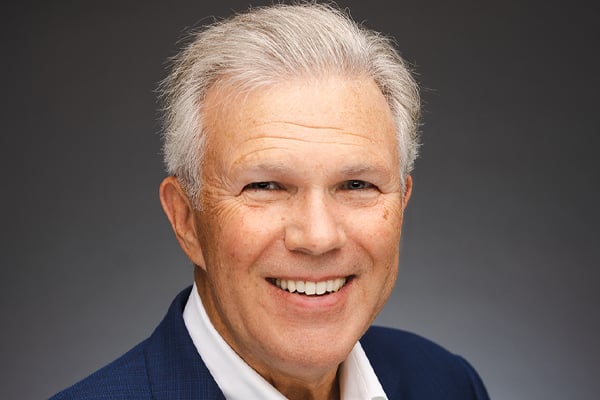 Al Lopus


 Al Lopus : May 22, 2025, 12:15:02 PM